
Preparing for Retirement Starts Long Before You Stop Working
Retirement planning is about creating a long-term strategy that evolves alongside your career, income, family priorities, and financial goals.
While investing is an important part of the process, effective retirement planning also involves coordinating savings strategies, tax considerations, employer benefits, and future income needs within a broader financial framework.
As circumstances change over time, a personalized plan can help provide greater clarity, organization, and confidence around the decisions that shape your future retirement.
Retirement Savings Strategies
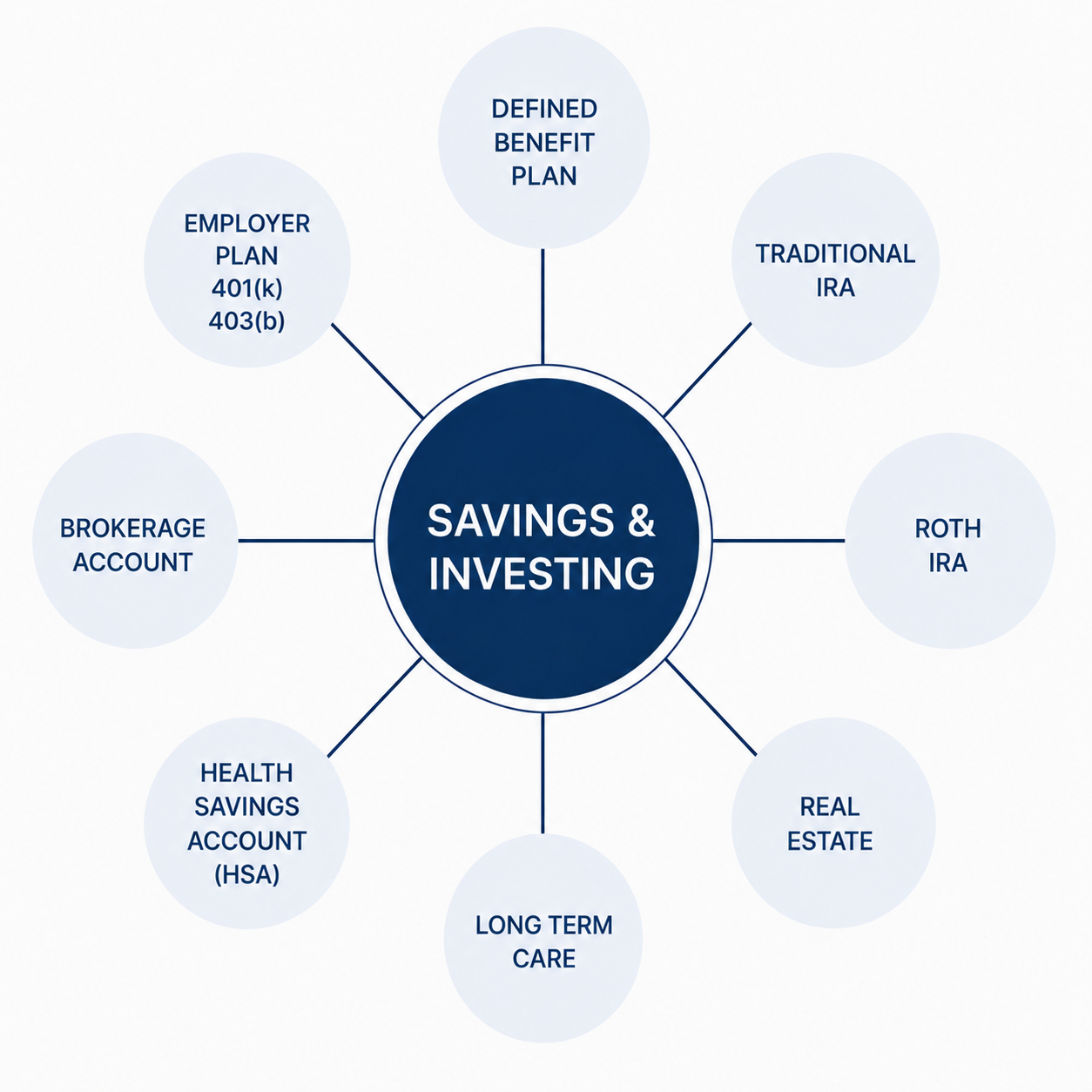
Building retirement savings through coordinated contributions across employer-sponsored plans, IRAs, brokerage accounts, and other long-term investment vehicles.
A structured savings approach can help create consistency over time while balancing current financial responsibilities with future retirement goals. Contribution strategies may also evolve throughout different stages of a career as income, tax considerations, and retirement timelines change.

Investment Allocation & Risk Management
Aligning investments with your time horizon, retirement objectives, and personal comfort with risk while adjusting allocation strategies as retirement approaches and financial needs change.
A thoughtful investment approach considers not only growth opportunities, but also stability, income needs, liquidity, and overall portfolio balance to help support both current and future retirement objectives.
Tax-Efficient Planning
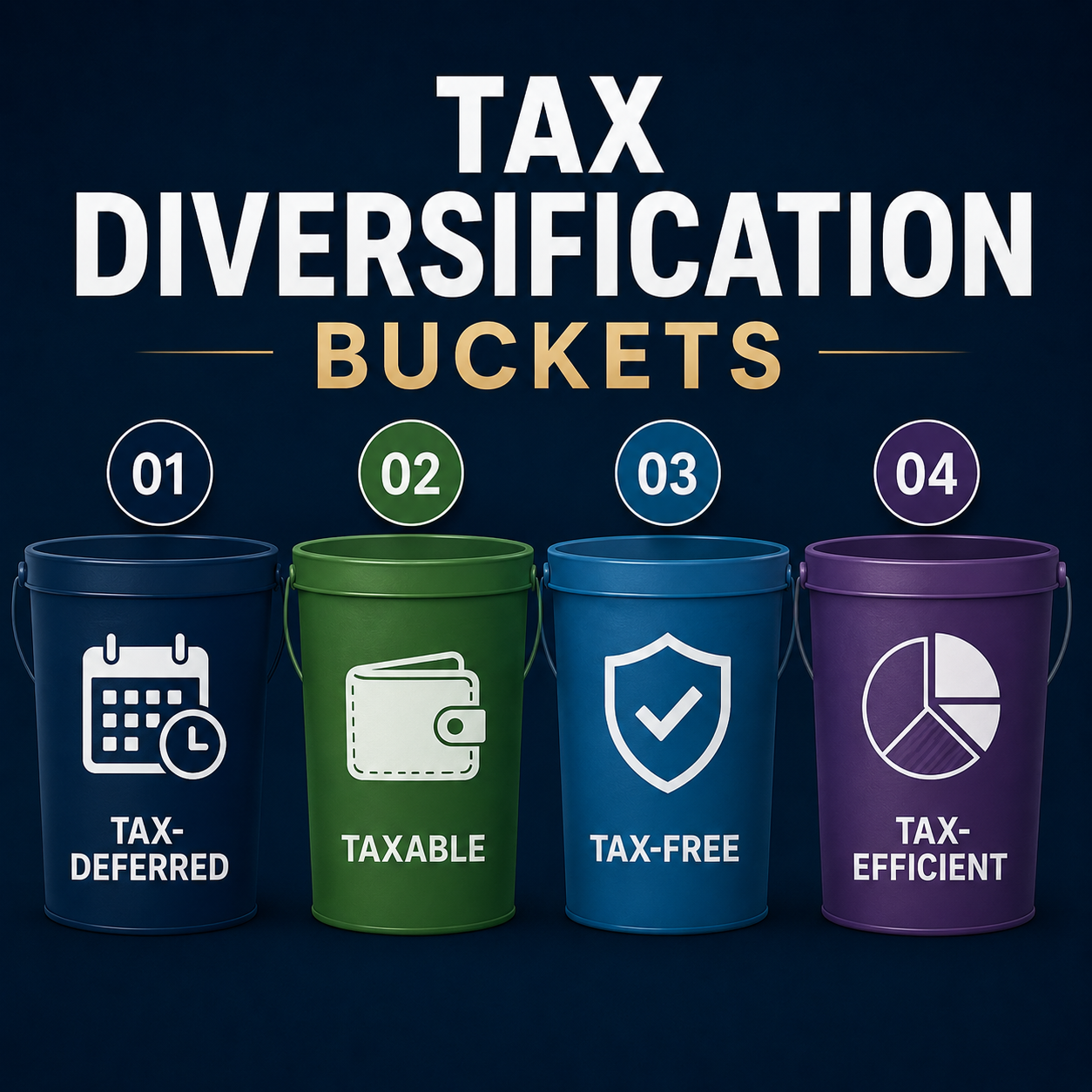
Evaluating how different investments are positioned across taxable, tax-deferred, and tax-free accounts to help improve long-term tax efficiency and portfolio coordination.
This may include evaluating asset location strategies, employer-sponsored retirement plan opportunities, tax-deferred savings vehicles, and the role different account types can play within an overall investment and retirement strategy.

Employer Benefits & Equity Compensation
Integrating workplace retirement plans, pensions, stock options, RSUs, and other employer benefits into your broader retirement strategy. Employer-sponsored benefits often represent a significant part of an overall financial picture.
Reviewing retirement plan options, pension elections, stock compensation, deferred compensation plans, and employer matching opportunities can help ensure these benefits are being coordinated effectively within a broader long-term retirement and tax strategy.

Approaching Retirement?
As retirement approaches, planning priorities often begin shifting toward retirement income, withdrawal strategies, Social Security decisions, and tax-efficient distributions.
Learn more about retirement income and distribution planning for retirees.